Category Trend-Setter
Setting the Benchmark for Community Engaged Design
by Camille Dodson, Editorial Assistant
This year the American Institute of Architects (AIA) awarded its first ever housing award for the new Community-Engaged Design category and set the benchmark for what it demands. This category, introduced in 2022 but with no wins until now, is a statement about what the profession considers excellence.
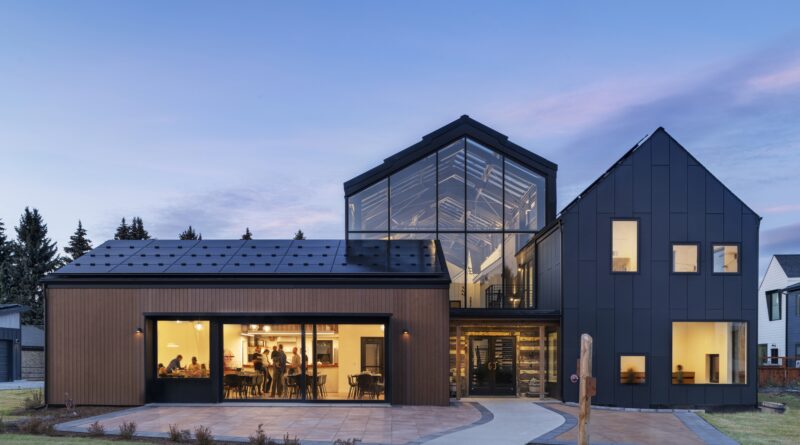
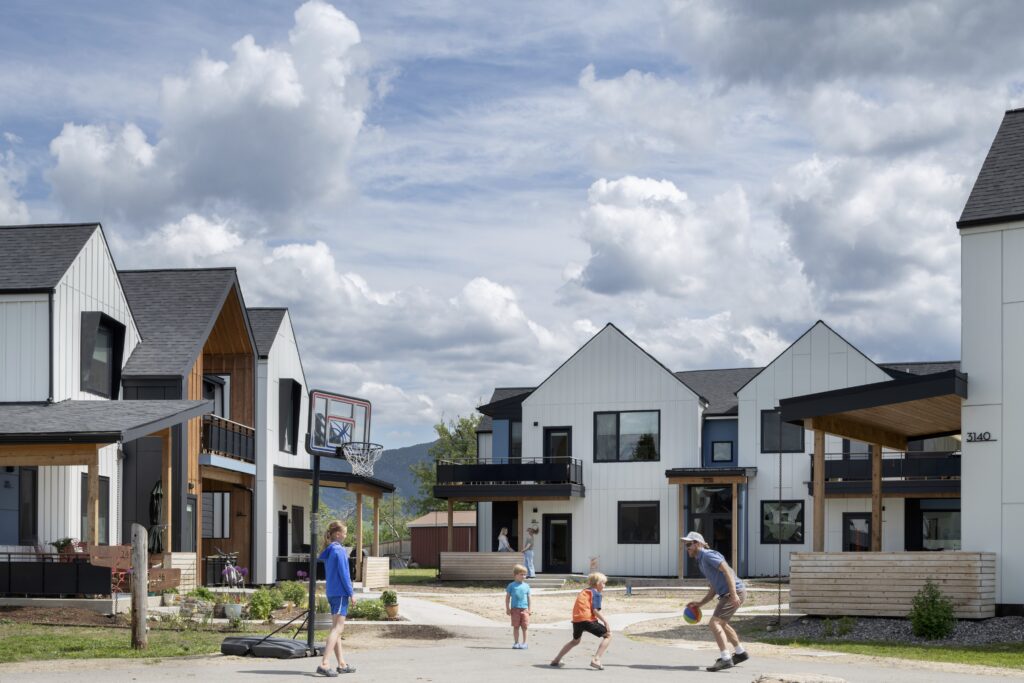
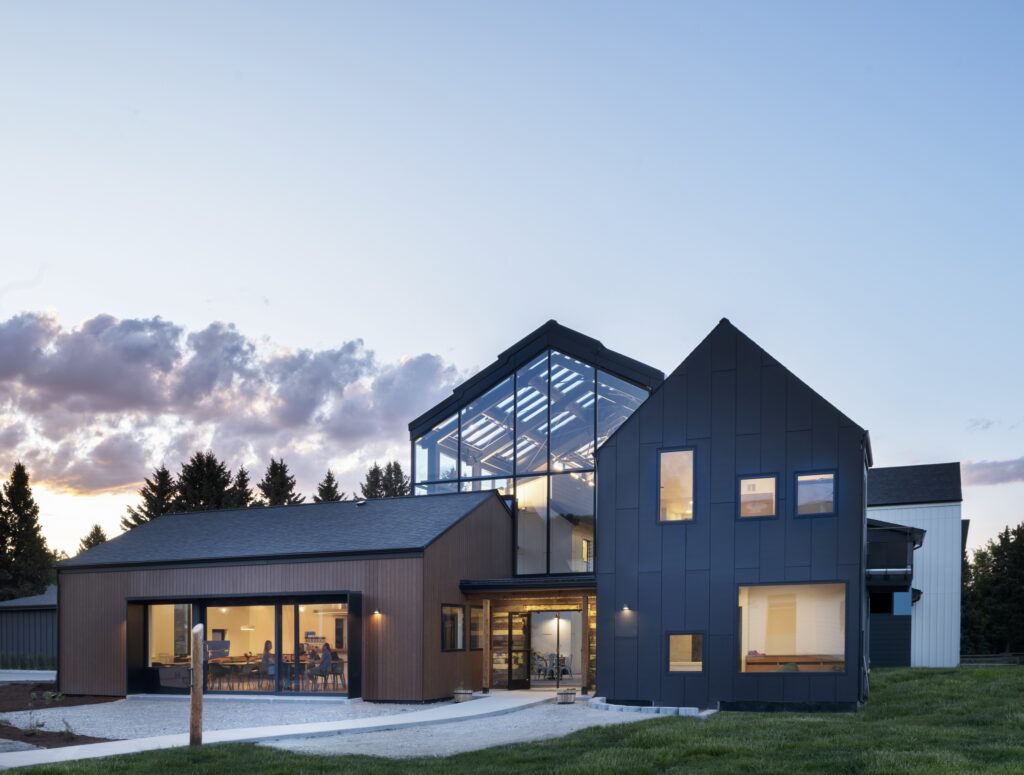
Bozeman Cohousing, Bozeman, Montana, designed by Bozeman-based Studio Cohab, is a 43-unit project that accomplishes net-zero energy, market-rate pricing through a diverse collection of unit types, and a participatory design process in which the future residents are engaged throughout the design process in a tactile, consent-based system.
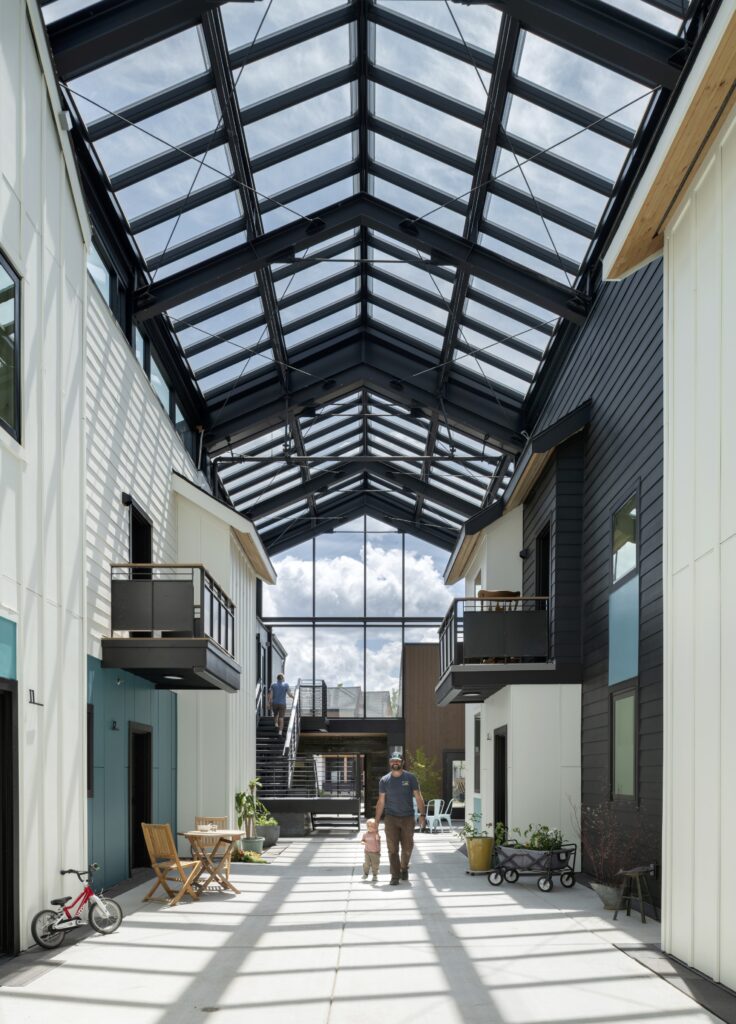
The story is not only that a small Montana firm won the state’s second ever AIA housing award, and first ever AIA housing award by a Montana firm, but also that a new category was created, and how, through Bozeman Cohousing’s win, it now has a project to define it. This inauguration raises a critical question: what does it mean for the profession when process is evaluated alongside product? The category is new, the benchmark is set, and the implications for how architects practice community engagement are only beginning to unfold.
Award programs are one of the clearest ways a profession articulates what it considers worth doing. When the AIA adds a category, it is making an argument that this aspect of design is now central to excellence. That it took four years of searching before finding a project worthy of the recognition is its own argument: the profession has been slower to practice this than to believe in it.
The addition of Community-Engaged Design to the Housing Award program reflects a conviction that has been building for years. The relational work of architecture, the sustained engagement with communities that shapes a project before a single line is drawn, is not a preliminary to design but a form of it. The category formalizes that conviction at the highest level of professional recognition, stating plainly that how a project comes into being is now evaluated with the same seriousness as what it becomes.
Cohousing, as a typology, sits at the center of that argument. It is a housing style where the future residents are not a passive client, waiting for a finished product to unwrap, but active participants. In this design process, the community participates in design workshops, planning sessions, and meetings, where they have the opportunity to explore their values and goals, and see them expressed in the project as it comes to life. There is no distance between the engaged community and the inhabited result. The process and the product are inextricably linked.
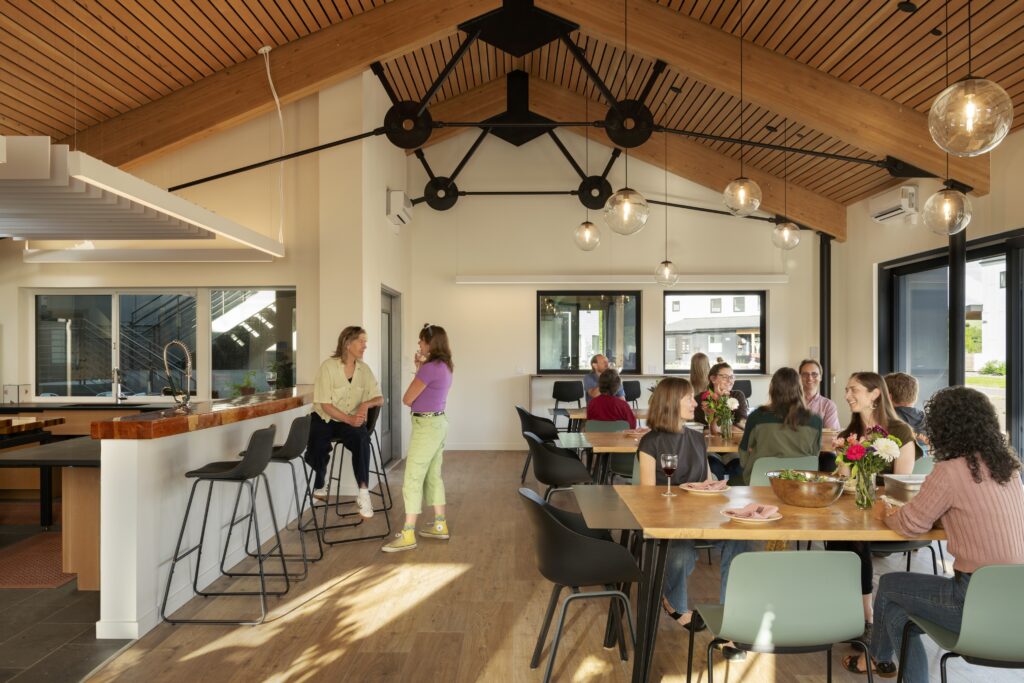
Receiving this recognition in the category’s first ever award carries a specific kind of weight. Bozeman Cohousing does not simply win an award. It becomes the reference point against which future submissions in this category will be measured. The jury, in selecting it, was not only evaluating a project, they were defining what the category means.
What they chose is instructive. Residents voluntarily funded two permanently affordable homes, matched by developer and city funding. Unhealthy trees cleared from the site were repurposed collaboratively by future residents, becoming the community’s dining tables. These outcomes were not deliverables handed to a community. They were generated by one. The jury looked at the results from this project and defined the new category, perfectly embracing what community-engaged design looks like.
That is a demanding benchmark. It implies that community-engaged design, to merit recognition at this level, should produce outcomes that a conventional process could not have reached. The standard being established here pushes engagement from a method to engagement as generator of consequence.
Architectural critique has typically evaluated the object, not the process. The object can be photographed, drawn, measured, and compared. The process leaves fewer artifacts and resists the kind of analysis that fills publications and award submissions. One effect of that bias, over time, has been to make the relational and participatory dimensions of practice feel adjacent to architecture rather than central to it.
The Community-Engaged Design category is a direct counter to that framing. The jury’s recognition of Bozeman Cohousing says the way this project was made constitutes architectural achievement in its own right. That reframing has implications that extend well beyond this award cycle. It changes what architects can point to when making the case, internally and to clients, that the investment of time and trust that genuine community engagement requires is worth it. It gives that argument a national stage and a concrete example. Four years after the category’s creation, its inaugural honoree defined the level of achievement the category was created to recognize: Bozeman Cohousing.