Designing for Decades
Why Post-Construction Roof Inspections Are Essential
by Richard K. Olson, President & Technical Director, Tile Roofing Industry Alliance
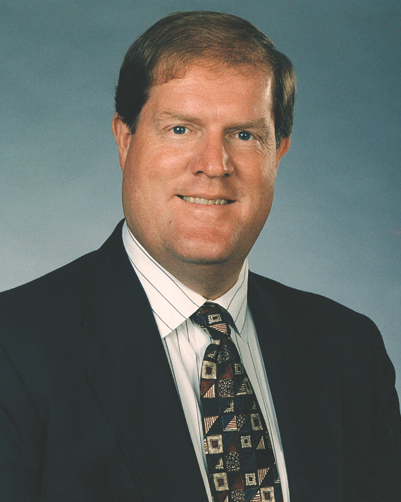
(Editor’s Note: Richard K. Olson is president and technical director for the Tile Roofing Industry Alliance. The association represents industry professionals involved in the manufacturing and installation of concrete and clay tile roofs in the United States and Canada, and works with national, state, and local building officials to develop installation techniques, codes, and standards for better roofing systems. Olson can be reached at rolson@tileroofing.org.)
Architects specify roofing systems with care using product research, assembly testing, fire and wind ratings, energy compliance, and aesthetic integration. What receives far less attention, in most projects, is everything that happens after the roof is installed.
The certificate of occupancy does not signal the end of the roof’s design story. For a properly installed roof assembly like our concrete or clay tile system, the service life may extend 50 years or longer. Whether the roof fulfills that potential or degrades prematurely through neglected maintenance and undetected damage depends significantly on decisions made during design, not after.
Insurance carriers are no longer passive participants in building performance. Faced with escalating losses from wildfire, hurricane, and hail across multiple regions simultaneously, major insurers have restructured their underwriting in ways that directly affect building owners, and the design professionals who specify their envelopes.
Carriers in high-risk markets are tightening requirements around roof age, condition, and documentation. Some are declining to renew policies on roofs past a certain age regardless of material. Others are conditioning coverage on demonstrated maintenance history. In California, Florida, and Colorado, “is the roof insurable?” has become as consequential a question as “does it meet code?” Specifying a 50-year tile system without providing the owner a framework for documenting its condition leaves them exposed to precisely the scrutiny the product was intended to help them avoid.
Every roofing system leaves the construction phase with some degree of vulnerability. Sealants at penetrations may not have been tooled correctly. A hip cap may be loose because mortar set during a cold night. A parapet flashing may be missing one fastener in a 16-inch pattern. On a tile roof these are ordinary field imperfections, almost always correctable with minimal effort if caught early.
Left undetected, they compound. A slow leak at a pipe boot unnoticed for three years does not produce a three-year repair bill. It produces damaged decking, compromised insulation, and potential remediation scope that can exceed the original roofing contract. The difference between those two outcomes is a post-construction inspection and a maintenance plan.
The most direct intervention available to the design professional is to specify a post-construction commissioning inspection as a required deliverable before closeout documentation is complete. This is not a contractor warranty walkthrough. It is a systematic third-party review of the installed system against the project specification and manufacturer installation requirements.
The commissioning report becomes the baseline condition document, a dated, photographic record that serves as the reference point for all subsequent inspections and, in the event of an insurance claim, evidence that the system was installed and inspected professionally.
The standard Division 07 roofing specification ends at installation. A life cycle-oriented specification adds an owner’s manual component addressing long-term obligations. For tile systems this should include: a regular inspection schedule, inspection scope by component, field tile, hips, ridges, flashings, penetrations, eave edge and gutters, restricted-access provisions, documentation requirements producing a written report with photographs after each inspection, and a cleaning protocol for moss, lichen, and debris appropriate to the regional climate.
This package, delivered at closeout alongside warranty and product data, changes the owner’s relationship to the roof from passive recipient to active steward, a distinction that matters when a claim is filed, a property changes hands, or a carrier asks for maintenance history.
Tile performs well across a wide range of climates, but maintenance priorities differ materially by region. Concrete and clay tile itself does not degrade meaningfully from UV exposure, thermal cycling, or moisture the way organic roofing materials do. The tile is not the limiting factor in tile roof longevity. The underlayment, sealants, metal flashings, and hip-and-ridge adhesive or mortar are.
The interventions that move a tile roof from 30-year performance to 50-year performance are not large. For instance, a ridge cap unit replaced in year eight does not become a water infiltration point in year nine. A pipe boot reseal in year 12 does not become a deck replacement in year 15. Maintenance is not an operating cost competing with the roof’s capital value. It is what protects that value across decades.
The design professional is often the last person to speak with the owner before handover. That conversation is an underused opportunity. The message to the owner is straightforward: the roofing system specified can perform for 50 years or more, but that performance is earned through periodic inspection and documented maintenance, not guaranteed by the specification or the installation warranty. The closeout package should include the commissioning report, maintenance schedule, regional protocols, post-event procedures, and warranty documentation in a single owner’s manual.
The market is moving to reinforce this. Programs like IBHS Fortified and ICC 600 are developing performance standards that extend beyond installation into documented ongoing condition. The IBHS Fortified Roof designation is already re-inspection-based in some markets, it must be maintained through condition reviews, not simply awarded at installation. Insurance carriers are beginning to require evidence of periodic inspection at renewal, not just inception. Buildings with documented maintenance histories will be more insurable, more transferable, and more financeable than those without.
Design professionals who build maintenance frameworks into project documentation today are positioning their practice for a market that will increasingly require this level of life cycle thinking as standard practice. Specifying concrete or clay tile is specifying for the long term. The design obligation should match the product’s potential. The roof plan does not end at substantial completion, it begins there.