Designing Long-Term Performance
The Importance of Integrated Roofing System Selection
by Janet Siciliano, Strategic Marketing Manager, Polyglass
Building owners must decide how to proceed when they are challenged with the shortcomings of an aging roof. By taking the time to perform a thoughtful roofing system selection through an integrated approach, this can enhance overall building-envelope performance, improve energy efficiency, reduce maintenance demands, and support long-term ownership objectives. In choosing an integrated system upgrade as opposed to standalone membrane replacements, architects and building owners can achieve a much better outcome and value throughout a building’s life cycle.
Integrated Roofing Replacement at Work
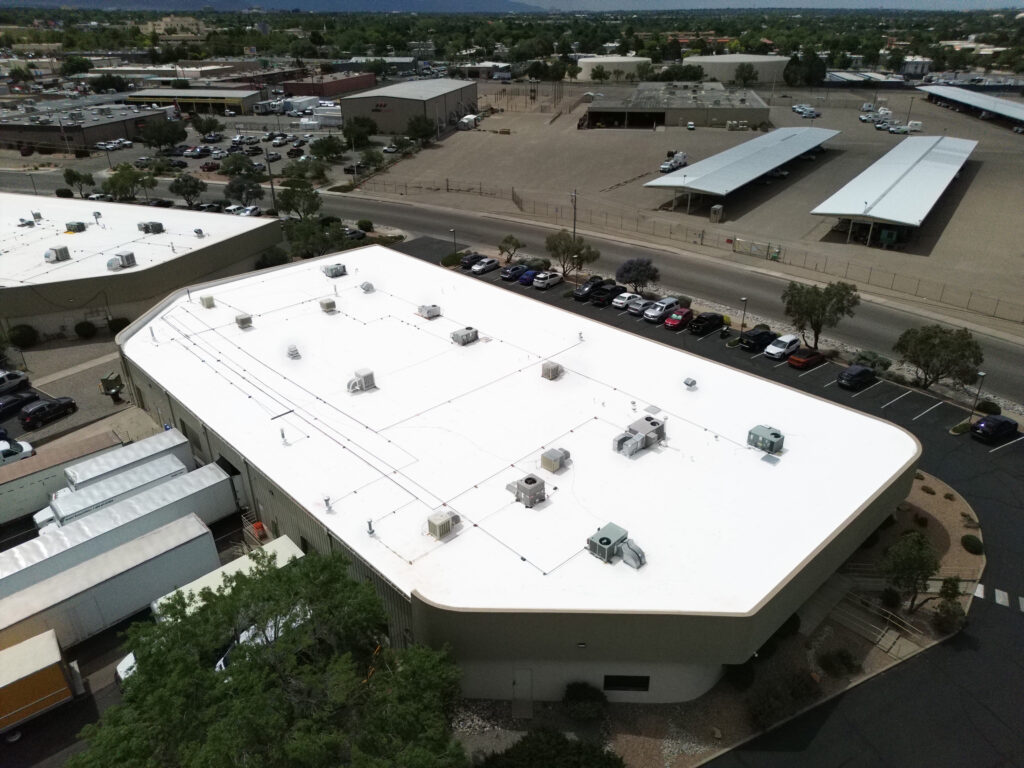
Showcasing the benefits of an integrated roofing approach, the McLeod Business Park, a commercial and industrial hub in Albuquerque, New Mexico, was due for a roofing replacement. In lieu of a costly and time-consuming full tear-off and replacement, the building team, working with roofing contractor Priority Commercial Nationwide, Dallas, Texas, opted for a single-ply retrofit solution.
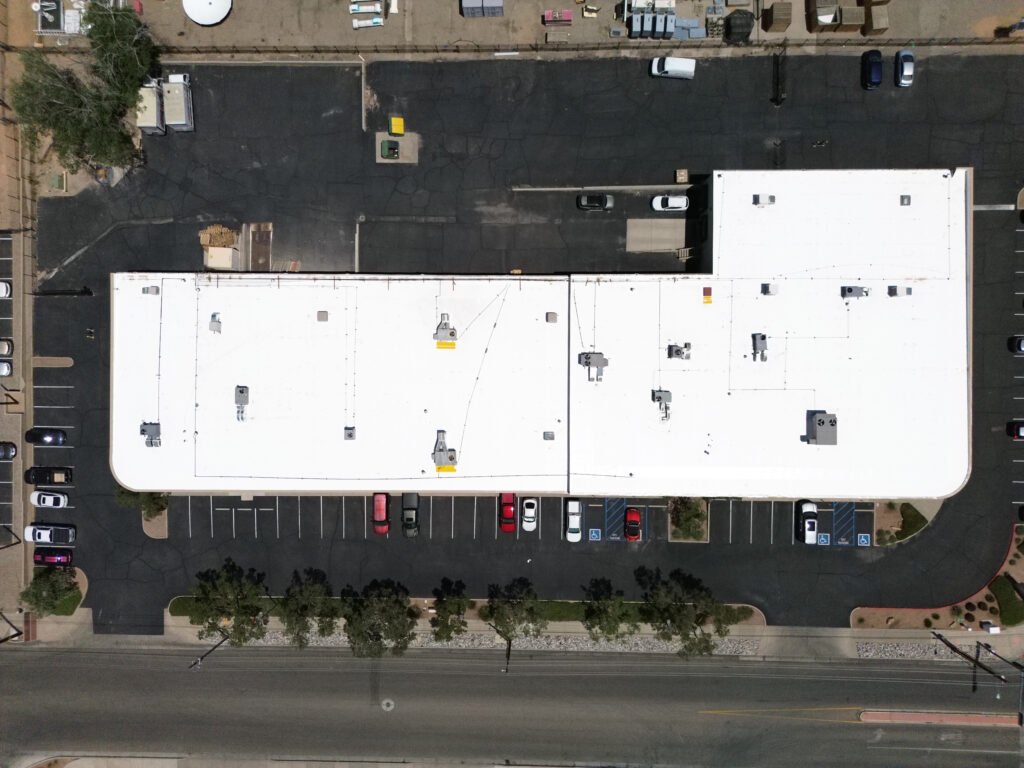
In order to deliver the most durable, long-lasting solution for the intense New Mexico desert heat, the building team chose a fully integrated roofing system. This approach ensured that the entire roofing assembly, including the insulation and accessories, was fully tested and code compliant, warrantied, and built to last.
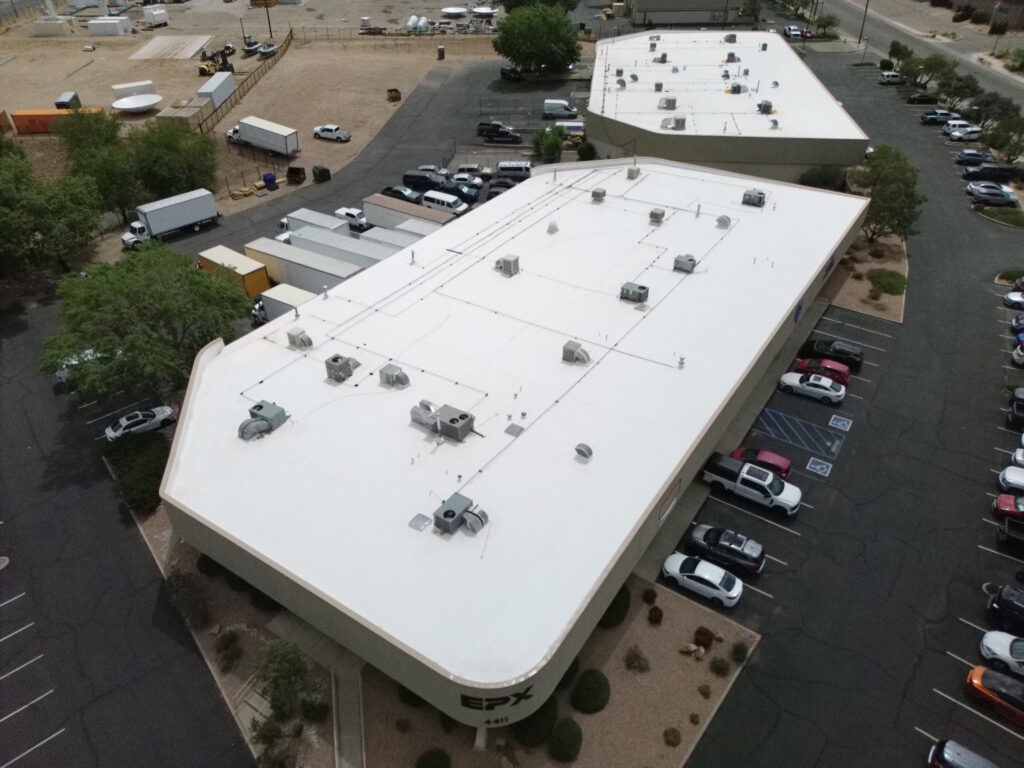
For this Mapeplan® PVC roofing membrane project, the corrugated channels of the existing metal roof were first filled using custom-cut flute-fill insulation, creating a flat, uniform substrate. Continuous one-inch Polytherm® Polyisocyanurate insulation boards were then installed across the 132,500 sq.ft. roof. Because the membrane, insulation, and attachment components were designed to function as a complete assembly, the project team was able to select a solution tailored to the building’s structural conditions while supporting long-term durability and thermal performance goals.
“With an integrated, whole system approach, you can work together with a roofing manufacturer to determine the best installation methods for a specific project,” explained Eric Younkin, National Business Development Manager, Polyglass® USA.
Optimized Installation
The solution was a non-penetrating, induction-welded process using RhinoBond® welding plates and fasteners. “If the contractor had mechanically attached the insulation into a light gauge metal, it wouldn’t have met the code’s uplift requirements because the fasteners would have pulled through the metal,” stated Younkin.
Through the induction welding process, the underside of the PVC sheet was fused onto the grid of plates and the stress on the roofing system was dispersed. The process also avoided any penetration of the roofing membrane and the associated risks of leaking water, compromised performance, and increased maintenance.
The fully integrated roofing replacement solution also enabled the business park, with its corporate, industrial, retail, and entertainment tenants, to remain fully operational throughout the retrofit process. The final product yielded a high-performance thermoplastic roof delivering UV and weathering durability over long-term exposure to the elements, fire resistance, and protection against chemicals, grease, and industrial contaminants.
The completed retrofit demonstrates how roofing replacement projects can create opportunities to improve overall building performance without major structural modifications while helping support long-term ownership and maintenance objectives.

Integrated Roofing System Benefits
While architects might consider piecing together a roofing replacement project with a membrane from one manufacturer, insulation from another, and accessories from a third vendor, this disjointed approach comes with a number of challenges and risks.
For starters, it’s difficult to ensure product compatibility, seam integrity, and full adherence to the roof. It’s also hard to ensure code compliance as the pieced-together system was never vetted and tested as a full assembly. Furthermore, there is no single source of responsibility or comprehensive warranty, which can often lead to finger pointing if something goes awry.
From a specification standpoint, integrated roofing assemblies simplify the design process. Rather than evaluating individual product performance characteristics in isolation, architects can assess how the complete assembly performs as a unified system.
Integrated systems can be particularly valuable in retrofit applications, where existing structural conditions often limit available options. In these situations, the ability to select components that have already been tested together can help reduce uncertainty and provide greater confidence that the completed assembly will perform as intended.
Thermal performance is another important consideration. Because insulation is a critical component of the overall roof assembly, its interaction with the roofing membrane, attachment system, and accessories can directly influence energy efficiency and occupant comfort. As noted, an integrated approach greatly minimizes the risk of incompatibility issues that can arise when materials are sourced from multiple manufacturers.
With building owners increasingly evaluating roofing investments based on life cycle performance, this means maintenance and long-term ownership costs are factored into roofing system selections. With established full system compatibility and comprehensive warranty coverage, integrated roofing systems are best poised to deliver these life cycle performance benefits.
Designed to Work Together
Ultimately, a roof functions as a critical component of the building envelope, making its performance essential to protecting both the building and its occupants. By specifying roofing assemblies whose membranes, insulation, attachment methods, and accessories are engineered to work together, architects and building owners can better balance durability, energy efficiency, code compliance, maintenance considerations, and long-term life cycle value.