Soldiering On
Fighting Snowfall On Colorado Roofs
by Marcus Dodson, Editor & Publisher
Like soldiers at full attention in formation, the soldier row pattern of snow guards is designed to defeat the enemy. In this case, the enemy is accumulating snowfall and ice. Especially on slick roofs, like synthetics, metal, and natural slate.
To prevent snow avalanches on roofing materials where snow just doesn’t grab hold, snow guards are installed to prevent slides that can be dangerous to people and property below. Made of aluminum, copper, or steel, the resilient wedges are strategically installed on the roof to give the snowpack something to grab onto, so the blanket of snow does not release off the roof.
Soldier Row Pattern
There’s actually a science to determining where snow guards are placed on the roof. Providing free roof layouts and product lists to architects, designers, roofing contractors, and homeowners for almost 15 years, Rocky Mountain Snow Guards experts highly recommend the effective soldier row pattern to encourage snow retention.

“When specifically placed 12 inches apart horizontally, snow guards are most effective in holding snow,” said Brian Cross with Rocky Mountain Snow Guards. “Plus, we’ve researched the vertical distance between the soldier rows. Depending on the pitch and snow load, it turns out those distances can be quite large, as long as the soldier rows have snow guards placed every 12 inches on center horizontally within the rows. This is because the close 12 inch spacing acts more like a barrier than the friction of a traditional spread pattern.”
New AIA Course
Soldier row patterns are just one element of the new Theory of Snow Retention CES course offered under the Project Planning and Design program through the American Institute of Architects. The free 45-minute presentation is intended for architects with general roofing knowledge. Participants gain an in-depth overview of snow retention systems used on sloped roofs and their critical role in protecting people and property from the hazards of sliding snow and ice.
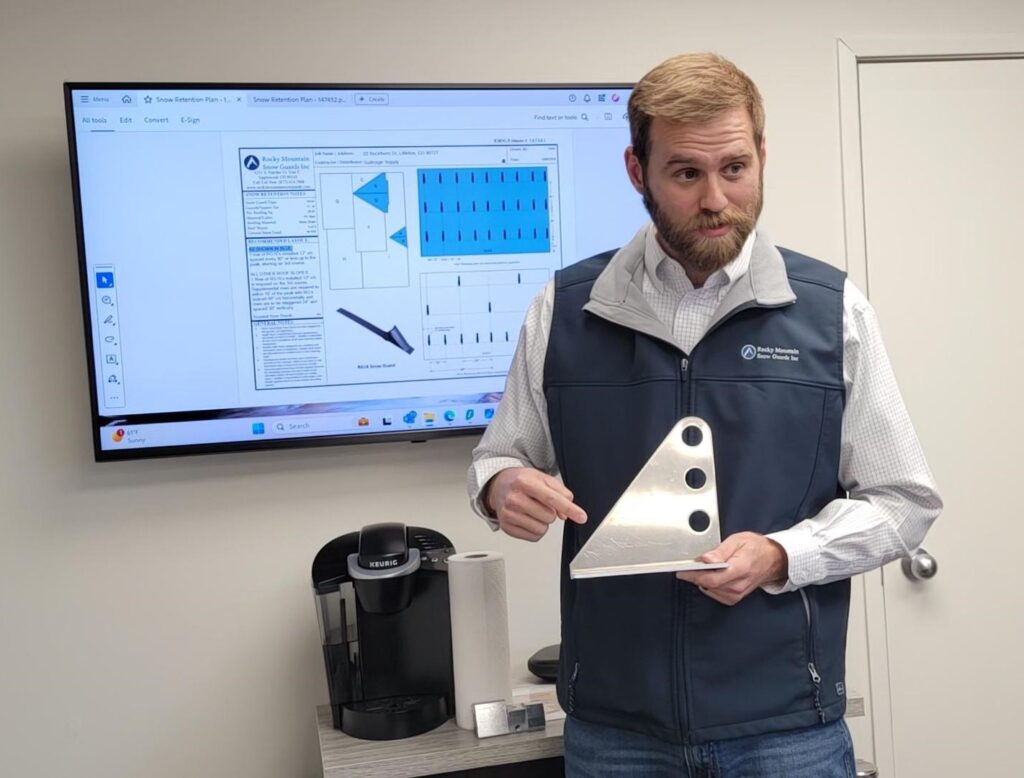
“The goal is for attendees to walk away with knowledge gained on the physical dynamics of snow movement, the impact of snow on roof materials and how snow load calculations influence system design,” said Cross. “The course also covers best practices for snow retention product selection, layout, and secure attachment methods tailored to various roof types and climates. By understanding these principles, design professionals can better be equipped to incorporate effective snow retention products into safe and code-compliant roof systems.”
Consistent Melt-Off
Across the state of Colorado, roofers such as Roof Pro Inc., Parker Colorado, On Point Contracting, Littleton, Colorado, and Umbrella Roofing, Basalt, Colorado, all rely on the soldier row pattern during their snow guard installations.
“When you hold the snow evenly throughout the roof there’s less opportunity for sections to slide down into pinch-points,” said Josh Yandle with Umbrella Roofing. “Then you have a much more consistent and even melt-off. This allows the gutters and heat cable to keep up with the melting as it warms up and reduces large ice accumulation on sections lower down the roof.”
From an installation standpoint, Yandle is a fan of the soldier row pattern. “The finished project is aesthetically pleasing to homeowners,” said Yandle. “The roof looks a lot less busy. With the right layouts the soldier row pattern can add to the finished product rather than distract from it. From the bidding standpoint, it’s much easier for me to get accurate numbers on a layout rather than using averages. Plus, on the installation side, my guys move faster installing the soldier row pattern. They don’t have to constantly snap chalk lines and pause to check layout patterns. When you install one snow guard every foot, it’s a smoother, more instinctive installation rather than pausing every three feet by three rows or something like that. It becomes a fluid part of the install.”
Winning Home Design
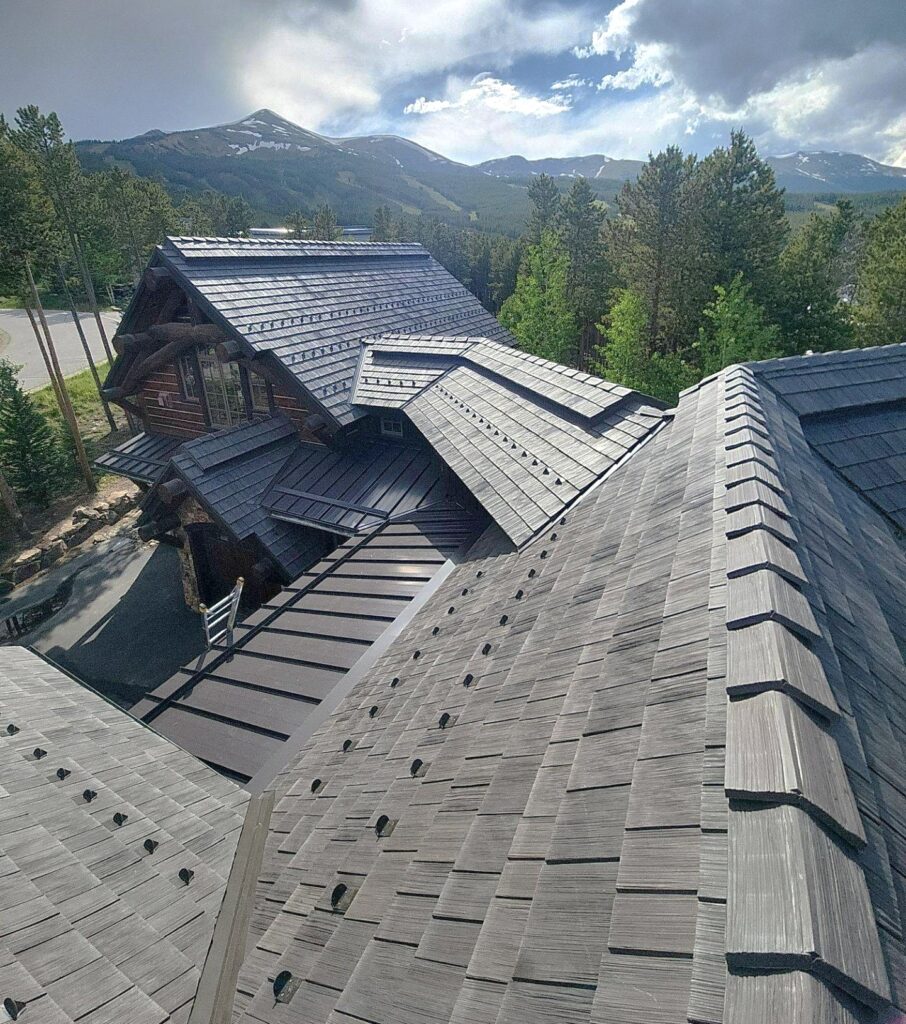
The Grand Prize Winner in the 2025 Show Us Our Snow Guards Contest notably used the soldier row pattern in their Breckenridge, Colorado residential project. Yeti 18 snow guards in dark bronze were installed in the soldier row pattern on the multi-faceted DaVinci® Shake composite roof.
Home Grown Roofing and Contracting, Conifer, Colorado, used the free design service to determine placement of the snow guards on different levels of the roof. The strategic design of the soldier row snow guards on the different roof elements of the home will help handle the average 300 inches of snowfall each year in the area on the composite shake roof.