Suspended Between Earth & Sky
Casa Azzurra Reimagines Desert Living
by Marcus Dodson, Publisher & Editor
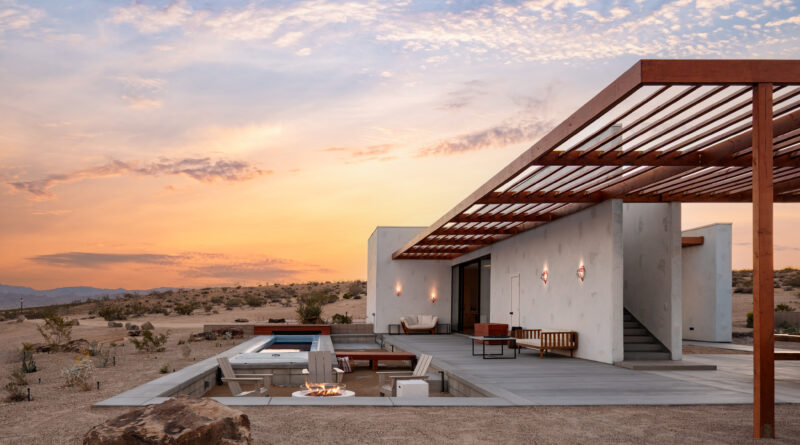
Set against the vast backdrop of Joshua Tree National Park, California, Casa Azzurra is a place where architecture and emotion converge. Conceived by architect Mirtilla Alliata di Montereale, the ten acre property offers more than just a scenic retreat, it invites a new kind of desert dwelling rooted in memory, movement, and meaning.
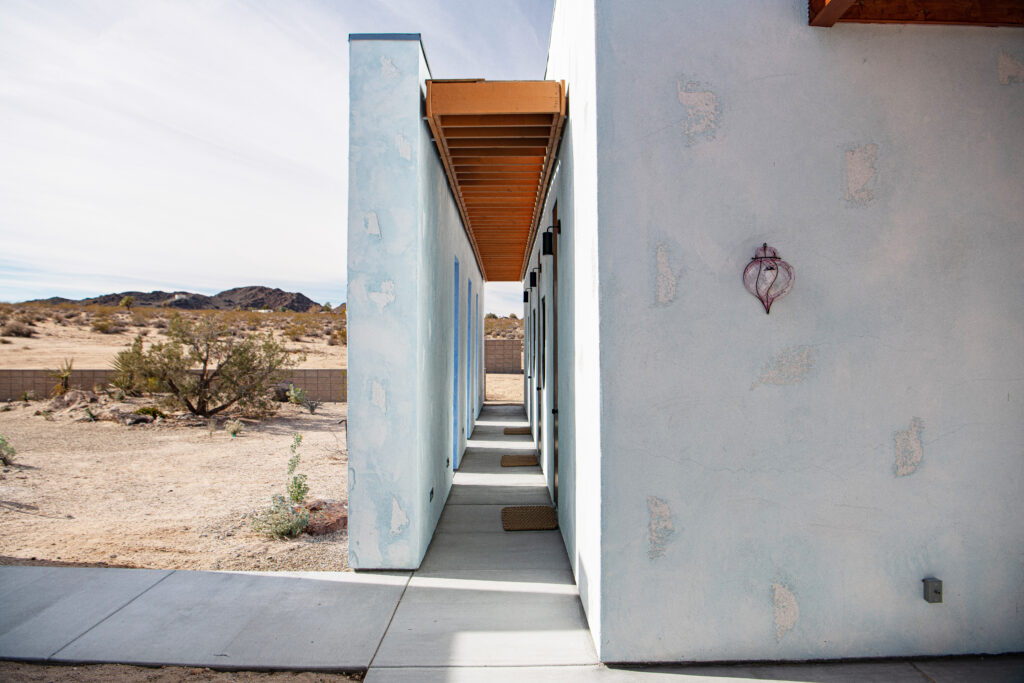
“Casa Azzurra was designed to create a self-contained world, an immersive environment where architecture amplifies both solitude and spontaneity,” said di Montereale. “The tall, sky-blue exterior walls enclose the garden and living spaces, not as barriers, but as frames for the surrounding Joshua Tree landscape.” These sky-blue walls, five distinct shades, to be exact, rise from the desert floor like surreal brushstrokes, echoing the shifting hues of the sky and carving out a space that feels at once grounded and otherworldly.
The home is di Montereale’s first solo project and the blueprint for her forthcoming hospitality brand, which will be launched in 2026. With a Master’s in Architecture from the Southern California Institute of Architecture and previous roles at studios led by Frank Gehry and Kulapat Yantrasast, di Montereale brings both discipline and nuance to her design. Her influences are layered and intimate: summers spent with family in the Aeolian Islands, the democratic spatial fluidity of Frank Lloyd Wright, and the stillness of the high desert.
Casa Azzurra unfolds more like a story than a floor plan. Interconnected paths, intimate courtyards, and shifting thresholds compose a layout that encourages exploration and discovery. “The layout is intentionally maze-like,” di Montereale explained. “There’s always another turn, another view, another pause.” This labyrinthine sensibility transforms the act of moving through the house into a kind of meditative wandering. The separation between the living and sleeping quarters isn’t just functional, it creates space for spontaneity. “You might detour to the bocce court, notice a flower in bloom, or take in the shifting light across the desert,” she said.
At the heart of the main house is a courtyard drenched in the brightest blue, a visual center of gravity that radiates outward. From here, natural light spills into the home through expansive sliding glass doors, illuminating an interior that feels both curated and lived-in. The chef’s kitchen flows effortlessly into a communal living area, fostering long, espresso-fueled mornings and dinners under the stars.
The four bedrooms, each a jewel-toned escape, feel like a world of their own. The rich ochres, deep greens, and warm rusts are a nod to di Montereale’s Italian heritage, while Murano glass fixtures, Salvador Dalí prints, and tactile materials like linen, wood, and stone strike a balance between elegance and ease. Skylit rain showers blur the boundary between indoor and outdoor, fostering moments of quiet immersion in nature.
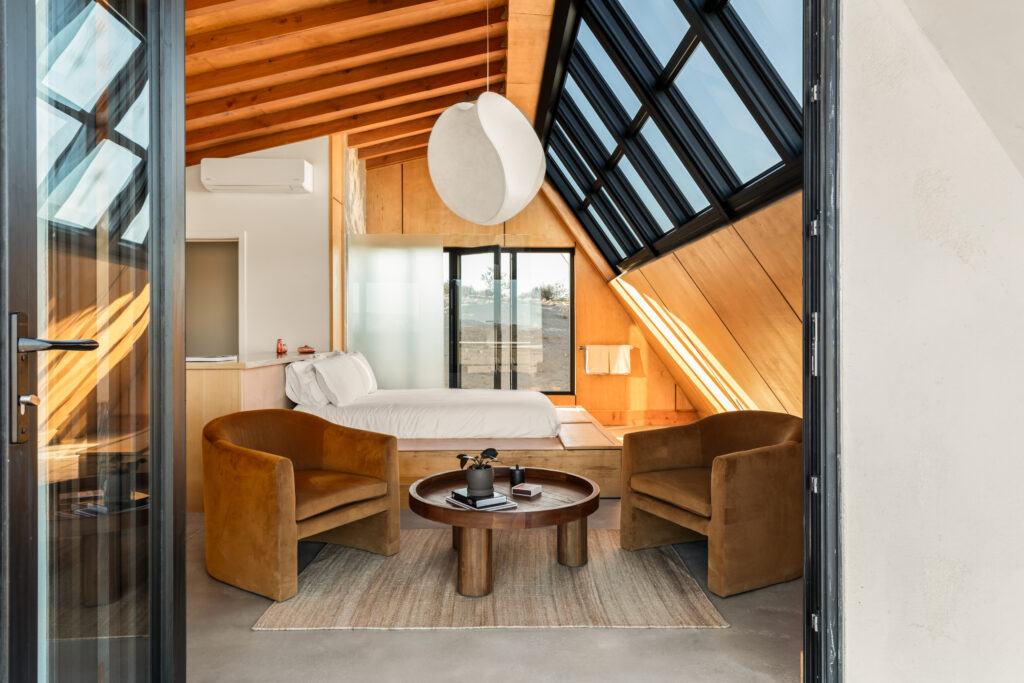
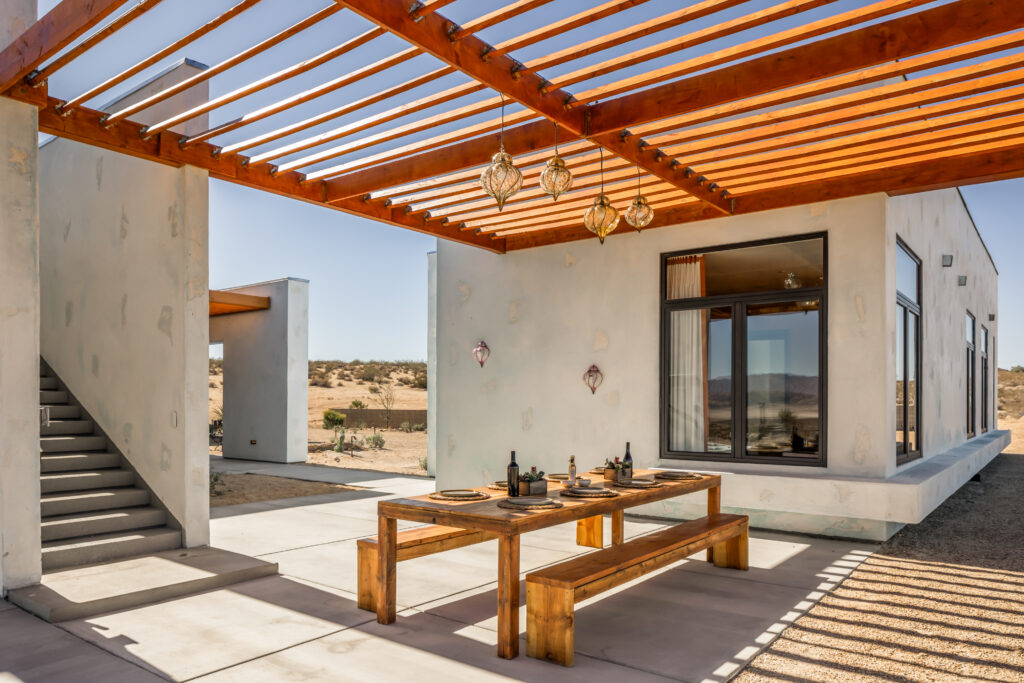
Beyond the main structure, a minimalist guest retreat is outfitted with wood-paneled walls and a custom-built platform bed strategically positioned for stargazing in complete solitude. The home’s outdoor spaces extend the architectural narrative: a desert garden by landscape studio Geoponika, Los Angeles, California, a 30 foot pool, courts for bocce and pickleball, and a custom-built dining area create a rhythm of movement between leisure and play.
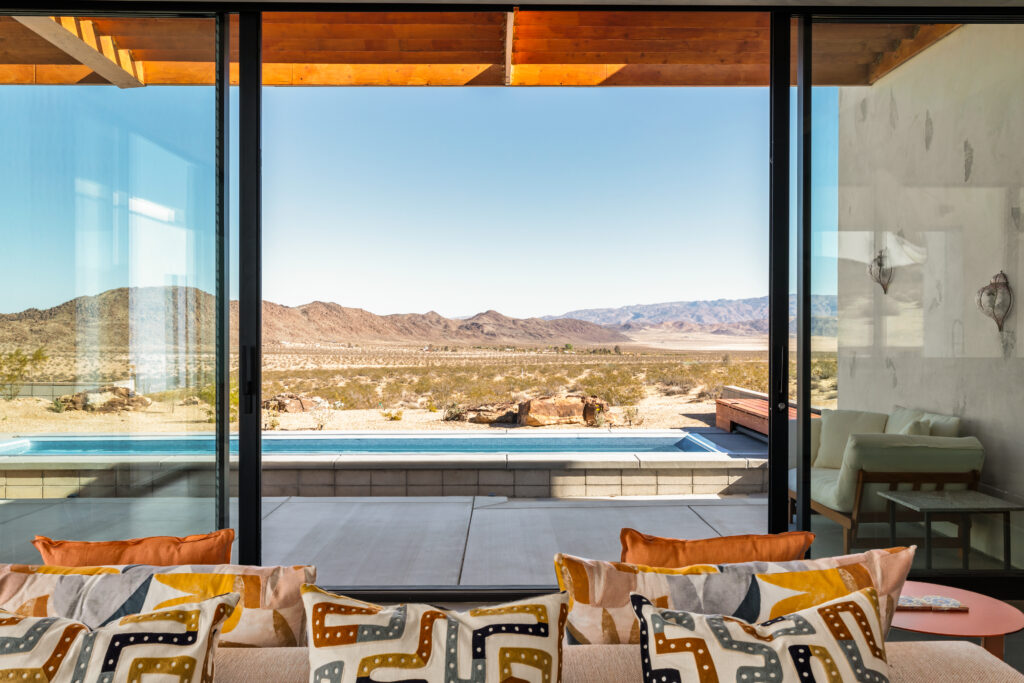
In a region where many homes seek to disappear into the landscape, Casa Azzurra does something different. It embraces contrast. It celebrates color. Most of all, it invites you to slow down, pay attention, and participate in the world around you. It’s a home designed not just to be looked at, but to be lived in, wandered through, lingered in, and remembered.
As di Montereale said, “it’s a place to wander, reflect, and feel suspended between earth and sky.” In that suspension lies the essence of Casa Azzurra: a world apart but deeply connected.