America at Home Study
Designing for the Way Americans Actually Live
By Nancy Keenan, President and CEO, DAHLIN Architecture
The meaning of home has changed dramatically, permanently, and in ways that should be reshaping how we design. However, much of how the United States housing market operates is outdated. The fourth and latest wave of the America at Home Study, conducted in the spring of 2025, revealed many insights about how Americans live now. More than that, the data made it clear that we’re designing for outdated assumptions about how people live, and it’s costing us. With nearly 16,000 respondents across all four waves since 2020, this longitudinal study offers an urgent perspective on evolving consumer attitudes around home and community.
As architects and designers, our work has moved beyond thinking about shelter. Now, we must look closely at the systems, rhythms, and experiences that support the whole human. If we want to build homes people want to live in, and homes they can afford, we need to stop iterating on the past and start responding to the now. Here are five of the most urgent design shifts emerging from the latest data.
1. The Wellness Gap Is Widening
Wellness is the number one motivator in housing decisions, but satisfaction is slipping across every dimension of wellness. The latest data shows a growing disconnect. For instance, 87% of respondents say financial wellness is important, but only 45% are satisfied. Similar deltas appear across physical, emotional, mental wellness, and all other wellness domains.
This widening gap should fundamentally reframe how we define value in home design. It’s no longer just about cost per square foot, but about how every design decision supports health, flexibility, and emotional well-being. Layouts should reduce stress, surfaces must feel clean and safe, and access to natural light and airflow has become a baseline expectation. In a post-pandemic world, wellness is no longer a perk, it’s a design imperative.
2. Clean Air & Water Are the New Must-Haves
Whole-home water filtration surged in importance to 70% of respondents, while indoor air purification rose to 69%. When asked why these features mattered to their personal wellness, the top reason selected by 60% of respondents was that they improve health and wellness. That’s a significant jump from 43% in the previous wave. Notably, this motivation outweighed traditionally dominant concerns like saving money or conserving energy.
Mechanical systems, filtration, and airflow design can no longer be retrofits. They must be intentionally integrated from the outset. That means collaborating with builders earlier in the process, specifying higher-performance products, and treating air and water quality as design priorities instead of mere line-item costs.
3. Smaller, Smarter, More Flexible
Consumers aren’t giving up on homeownership. They’re adapting to make it attainable. The study shows that buyers are willing to make meaningful compromises to help them purchase a home. Among those surveyed, 40% say they would accept a smaller home, 33% would forgo a garage, and 25% are open to smaller room sizes. The demand for modular or manufactured homes has also jumped from 22% to 32%. It’s not a lack of aspiration, but a recalibration of priorities as buyers are redefining what’s essential to achieve stability and independence through homeownership.
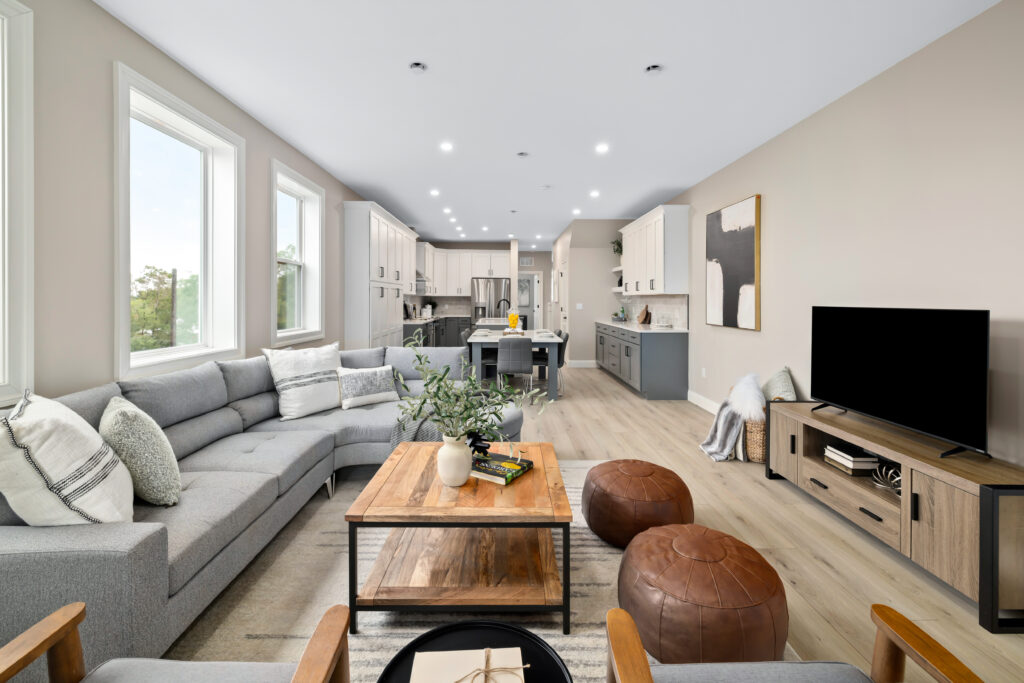
This presents an opportunity for the design community. These preferences align perfectly with design strategies that emphasize functionality, adaptability, and efficiency. Instead of grand foyers or underused formal dining rooms, today’s homes need flex spaces that evolve with changing household needs. This includes supporting work from home needs, which accounts for 32% of people on a full-time basis and 29% on a hybrid schedule. The kitchen might double as a workspace. A bathroom can become a wellness zone. Shared areas should support both solitude and connection. This shift calls on architects and designers to champion right-sizing homes, not downsizing.

4. Community Design is a Value Add
For the first time in the study’s history, walkability to coffee shops and casual eateries, 49%, surpassed trails, 48%, as the most desired community feature. This signals a deep need for informal, everyday connection points, especially among the growing number of smaller households or people working from home. According to Kantar, a data analytics and consulting company that provides consumer insights on the attitudes, values and behaviors impacting purchase behavior, and a collaborator on the America at Home Study since Wave Two, one and two person households now make up 64% of all United States homes. As household size shrinks and hybrid work becomes embedded in daily life, the need for community spaces that foster casual interaction and emotional wellness has become increasingly more important. According to Kantar, singles have below average homeownership rates, and are the fastest growing household type, highlighting the importance of designing homes that meet their needs.
People want the micro-interactions that make a place feel alive: grabbing a coffee, chatting with a neighbor, and seeing kids play in a shaded park. Communities that prioritize these small, frequent moments of connection will be more desirable and resilient. Design must extend beyond individual lots and consider the connective tissue of neighborhoods like paseos, pocket parks, casual gathering zones, and walkability.
5. The Kitchen Is Still Sacred, But It’s Evolving
When asked what people would invest in with a $50,000 budget, the top response was a better equipped and more modern kitchen for cooking, highlighting a continued desire to make kitchens more usable, efficient, and tech-forward. That priority is echoed in behavior: cooking and baking is the activity people report doing more of today than they did five years ago.
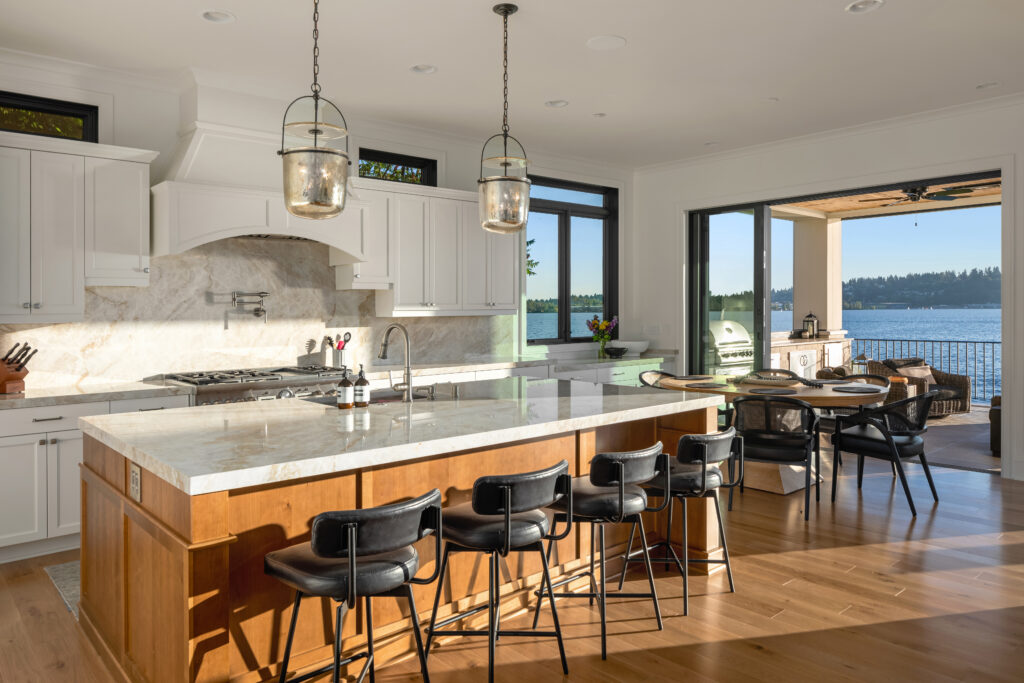
Today’s kitchens are expected to perform. They’re social hubs, workstations, wellness spaces, and tech centers all at once. Five of the top seven most-wanted home features were directly kitchen-related or tied to energy and efficiency, including better-equipped kitchens, energy-efficient appliances, expanded storage, kitchen island seating, and indoor-outdoor dining. That tells us kitchens are no longer isolated rooms, and they deserve multifunctional design strategies that match.
A New Design Mandate
Taken together, these insights point to a clear mandate for the design industry. The average household doesn’t look like it used to, and we need to change that in our designs. Households are smaller, more flexible, more wellness-minded, and more financially cautious. Traditional models of ownership, size, and layout are becoming less relevant and increasingly unaffordable.
This is not about chasing trends. It’s about listening. Consumers are telling us exactly what they need. As designers and architects, we have the tools and creativity to respond, but doing so means rethinking what we value, how we measure success, and who we’re designing for. If we can realign our designs with the way Americans actually live, we have the chance to not only create better homes, but better lives and communities.