Wildfire Mitigation
Gutter Guards are a Necessity in Fire-Prone Areas
by Marcus Dodson, Editor & Publisher
Wildfire mitigation in building design has traditionally focused on roof coverings, exterior wall assemblies, defensible space, and material ignition resistance. While these elements remain foundational, recent large-scale wildfire events, particularly those seen in Southern California and throughout the Western United States, have exposed less obvious but equally critical vulnerabilities in the building envelope. One such vulnerability is the gutter system.
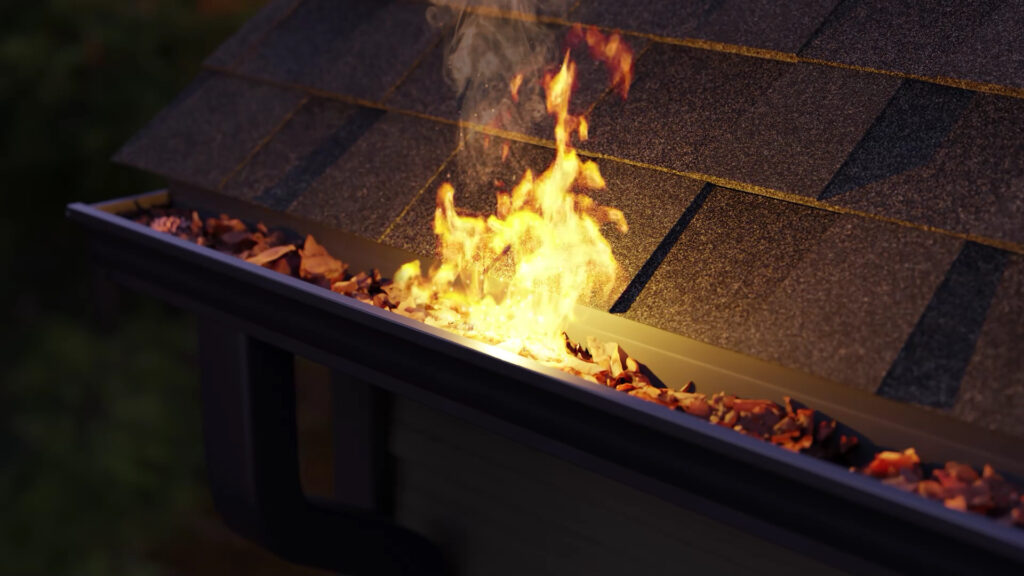
Wind-borne embers, not direct flame contact, are responsible for the majority of structure ignitions during wildfires. These embers can travel blocks or even miles ahead of a fire front, landing on and around buildings in ways that defeat otherwise fire-resistant materials. Open gutters containing dry leaves, pine needles, and other debris provide an ideal ignition point and a direct pathway for fire to enter the roof assembly.
For contractors and architects working in Wildland-Urban Interface (WUI) zones, gutter guards should be viewed not as optional accessories, but as essential fire-mitigation components of the building design. Even a Class A fire-rated roof is not immune to this exposure. Embers can land on the roof surface, roll downslope, and fall directly into open gutters. If those gutters contain accumulated organic material, ignition can occur quickly.
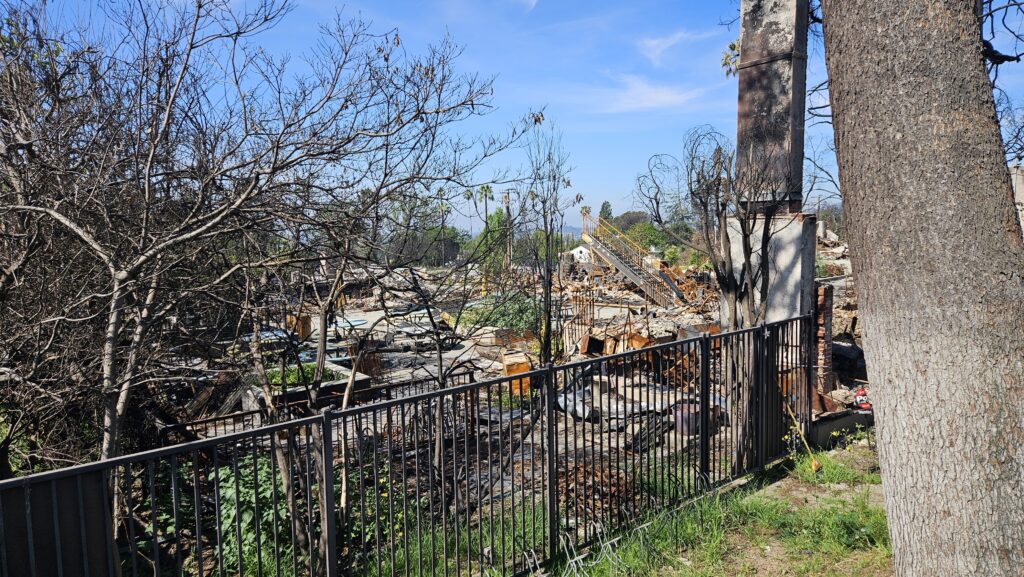
Once debris in the gutter ignites, the fire is positioned immediately beneath the roof edge, one of the most vulnerable areas of the structure. Flames can enter through eaves, gaps in fascia, or soffit vents, spreading into attic spaces or unprotected combustible components of the roof assembly. From there, the fire can spread internally, often unnoticed until structural involvement is well underway.
This risk is amplified by several factors such as: infrequent maintenance, roof geometry, wind exposure, and eave construction. In large wildfire events, even well-maintained properties can experience rapid debris accumulation during the fire itself, as embers and burning vegetation are deposited onto roof surfaces.
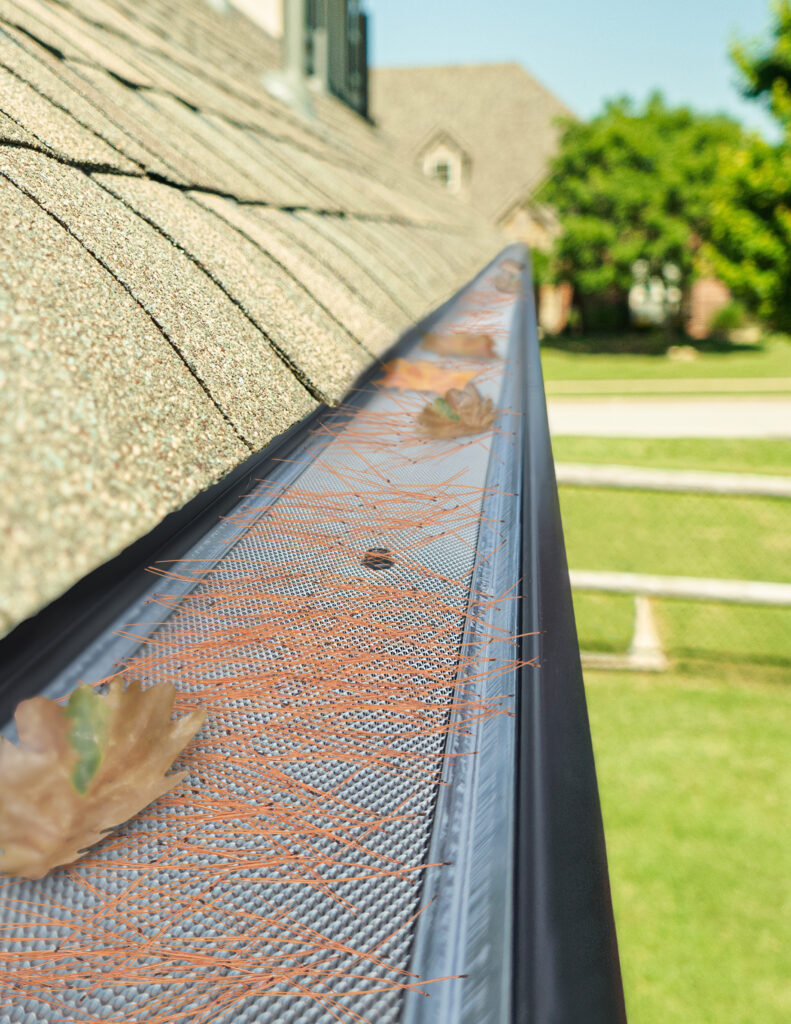
Gutter guards fundamentally change how gutters behave during wildfire exposure. Rather than acting as debris collectors, protected gutters remain largely free of combustible material and resistant to ember intrusion and fire spread.
Properly specified gutter guards perform several critical functions including: preventing debris accumulation, blocking ember entry, reducing maintenance dependence, and limiting flame spread. In wildfire conditions, this combination can significantly reduce the likelihood that a small ember exposure escalates into a full structural ignition.
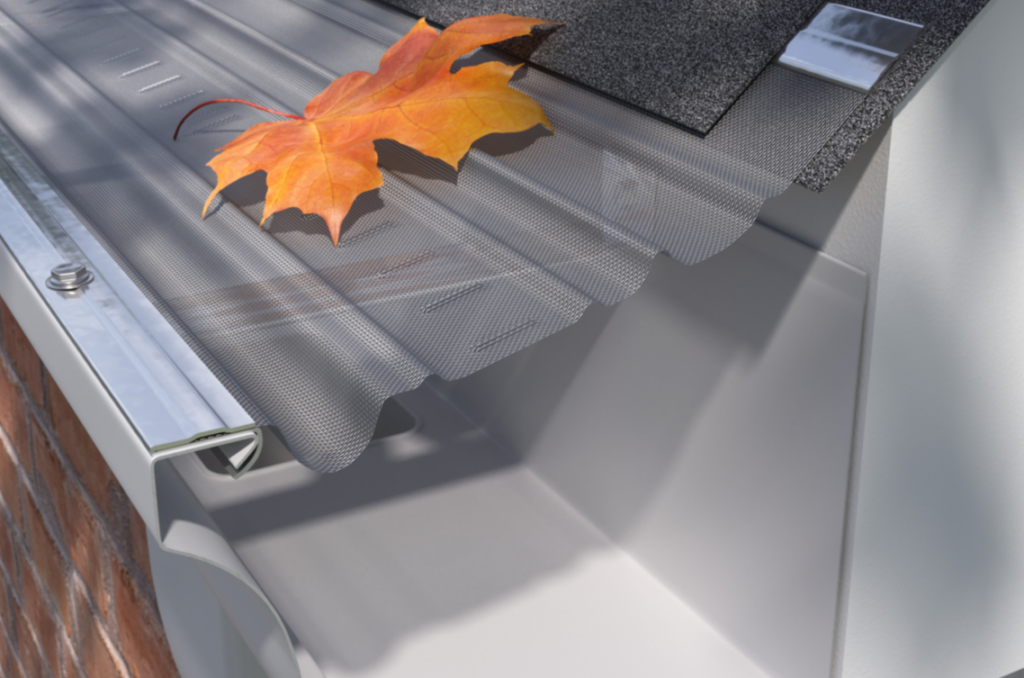
Not all gutter guards contribute equally to fire resistance. Material selection is critical. The California Department of Forestry and Fire Protection (CAL FIRE) specifically recommends the use of non-combustible materials, such as metal, for both gutters and gutter guards. Metal guards, typically aluminum or steel, do not ignite, melt, or contribute fuel to a fire.
In contrast, foam inserts and plastic-based guards pose serious risks. Foam inserts, in particular, are highly flammable and can accelerate fire spread once ignited. Instead of protecting the gutter, these products can transform it into a continuous burning element along the roof edge.
For WUI projects and fire-prone regions, best practices include: all-metal gutter systems, metal mesh or perforated metal gutter guards, guards securely fastened to resist wind uplift, and designs that integrate tightly with roof edges to prevent ember entry gaps. Specifying non-combustible systems aligns with both CAL FIRE guidance and emerging fire-resistant construction standards.
To have assurance that the gutter protection products you specify can withstand critical fire standards, look to the highly respected American Society for Testing Materials (ASTM). ASTM has two tests: ASTM 2768, which is a 30-minute burn/flame spread test, and ASTM 2886, which tests the ability of a gutter guard to prevent flying embers from entering the gutter system. If you are able to gain proof from a manufacturer that their products meet one or both of these standards, then you are helping give homeowners a more comprehensive fire-resistant envelope.
“Flying embers from wildfires, fireworks, and even backyard fire pits are prompting communities throughout North America to demand greater focus on using building products that resist the spread of fire,” said Mike Cellura, E-Z Gutter Guard Western Regional Sales Manager. “The right gutter protection is integral to helping slow the spread of fire, especially in the West, where wildfires are increasingly prevalent.”
Buildings with steep-slope roofs present unique challenges in wildfire mitigation. While steep slopes can help shed debris more effectively than low-slope roofs, they also accelerate ember movement toward gutters. In these conditions, gutter guards serve as a critical defensive layer. By blocking entry into the gutter channel and limiting debris accumulation, guards reduce the chance that embers find fuel at the most vulnerable junction of roof and wall.
E-Z Gutter Guard is a leader in gutter protection. They have seen an increase in gutter guard orders in areas throughout the West that are rebuilding from fire devastation. They offer a wide variety of gutter guards that help keep leaves, pine needles, pollen, and other debris safely out of the vulnerable areas of the roof.
WUI zones continue to expand as development pushes into fire-prone landscapes. In the Western United States, millions of homes and commercial buildings are now located in areas where wildfire exposure is not hypothetical, but expected. In these environments, wildfire mitigation must be holistic. Roof coverings, siding, vents, and defensible space all work together. For architects, integrating gutter guards into the design phase ensures compatibility with roof assemblies and aesthetic goals. For contractors, proper installation ensures that guards perform as intended under real-world fire conditions.
In wildfire mitigation, small details often make the difference between a building that survives and one that ignites. Gutter guards may seem minor compared to roof assemblies or exterior wall systems, but their role in preventing ember-driven ignition is substantial. For architects and contractors working in fire-prone regions, specifying and installing metal gutter guards should be viewed as a best practice and a responsible design choice. As wildfire behavior continues to challenge conventional assumptions, resilient buildings must be designed with every vulnerability addressed.